What eviction notice preparation is
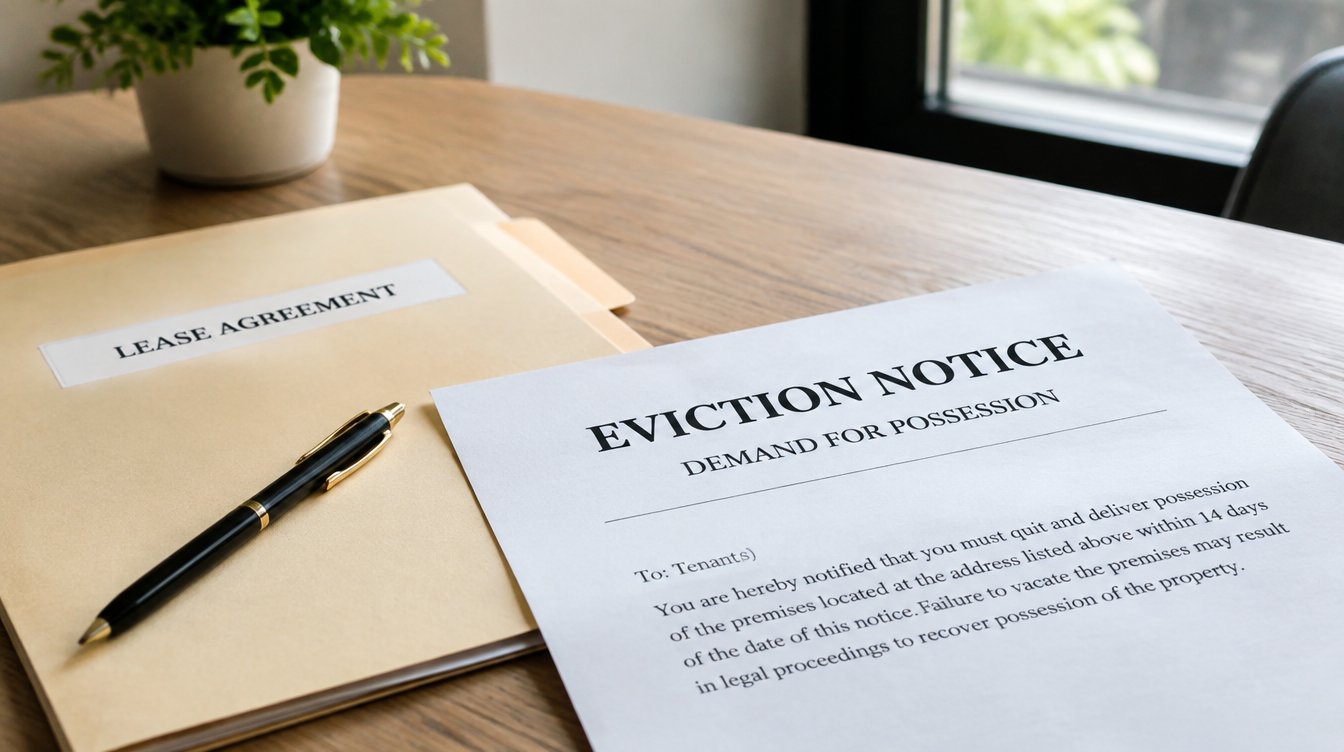
Most states require a written eviction notice (also searched as notice of eviction or notice eviction) before you can file. It has to match the grounds, run for the required period, and be delivered in a way you can prove later.
Key facts
- Lifecycle stage: Notice.
- EvictIQ field operations: Georgia (metro Atlanta). We do not operate field crews in every state.
- Exact claims only: 10,000+ completed evictions; 72-hour service of tenant after filing on average (Georgia service).
- Not a law firm. Not legal advice. No date guarantees. No price list on this page.
What this service is
Notice is the first legal step most landlords skip or half-do. The type of notice, the number of days, and how it must be delivered are set by state law and sometimes by city ordinance. A national page cannot publish a stale timetable and call it current.
Preparation means the notice matches the lease and the ledger it relies on, is timed so the filing that follows is not premature, and is retained with proof of delivery for the case file.
In Georgia, a demand for possession is required before a dispossessory can be filed. Other states use different labels and different periods for the same gate.
When this step is needed
You need a notice before most filings: pay-or-quit, cure-or-quit, or demand for possession, depending on grounds and state law. Filing without a required notice is how cases die at the hearing.
Prepare a new notice if the last one was verbal, undated, delivered without proof, or did not match the ledger. Do not reuse a stale notice after the facts have changed.
How the process usually works
- Match notice type to grounds: non-payment, violation, or holdover.
- Reconcile amounts and lease terms so the paper matches the file.
- Deliver it in a method your state will recognize, and keep proof.
- Wait the required period. Premature filing is a common dismissal.
- Retain copies for the hearing packet before anyone files.
Courts and executing offices set their own calendars. These are operational steps, not a guaranteed timeline.
What this step usually covers
- Notice type matched to the grounds (non-payment, violation, or holdover)
- Content reconciled against the lease and ledger
- Delivery documented so the demand is provable later
- Timing checked so the filing is not premature
- Copies retained for the hearing file
These are the jobs the step exists to do. They are not a nationwide menu EvictIQ staffs in every county.
What you must verify locally
- Required notice type and length for your grounds in that state and city
- Whether the lease shortens or lengthens the statutory period (and whether that is allowed)
- Accepted delivery methods and what counts as proof
- Whether a defective notice dismisses the case or just delays it
We do not publish a stale per-state timetable. Statutes change.
What this does not include
- Legal advice, courtroom representation, or an attorney-client relationship
- A guaranteed hearing date, writ date, or setout date — courts and executing offices set their own calendars
- Self-help lockouts, utility shutoffs, or removal of belongings outside a court-issued writ
- A published price. Scope and price are written after intake, before work starts
Georgia we can handle. Elsewhere we route.
If the property is in Georgia, EvictIQ can take this step end to end. If it isn't, we'll tell you what to look for in a local attorney or service — we do not operate field crews in every state.
Related services
All eviction services — the full catalog, grouped by category on the hub.
Pay-or-Quit Notices
The non-payment eviction notice: pay the documented rent or surrender possession.
Demand Notice Services
A written demand that documents the balance and deadline before an eviction notice or filing.
Notice to Vacate
The possession notice used for holdover, end-of-term, or no-cause tenancies where the state allows it.
Common questions
Can I file without a notice?
Most states require written notice before filing. What that notice must say, and how long it must run, is state law. Confirm the current rule where the property sits. This page is not a substitute for that statute.
Why does delivery proof matter?
The response clock and the court’s willingness to proceed often turn on whether the tenant was actually notified. A text or a conversation is usually not enough. Deliver it in a way you can prove later.
Does EvictIQ prepare notices outside Georgia?
We handle cases directly in Georgia. Elsewhere we can explain what the notice step is and what to verify with local counsel or a local service. We do not claim field coverage in every state.
Need help with this step?
Tell us where the property is and where the case stands. Georgia we handle; elsewhere we route.
- A coordinator reviews it, usually the same business day
- You get a written scope and price before anything is filed
- Georgia Eviction Notice Preparation
We'll tell you so rather than take the lead. What to look for locally: a provider who knows which office executes writs in your county, who gives you cycle-time variance rather than an average, and who refuses to guarantee a completion date.
Working a real case?
Georgia we handle end to end. Anywhere else, we'll tell you what to look for in a local provider.